Larry's Take on Organized Religion in the USA

How do you feel about religion?

Background
As a Freethinker, I consciously choose what to believe, and what not to believe. For example, I believe in reincarnation and in guardian angels.
I'm not completely sure why. However I do feel a moral obligation to tell the truth if a friend asks what I believe. I'm definitely not willing to die for my belief. :) And if other people don't share my belief in reincarnation, I do not have a problem with that.
I try to avoid being overly cynical about religion. The experience of an acquaintance serves as a cautionary tale. Many years ago, he looked upon all religions with a jaundiced eye, and enjoyed telling generic jokes about religion. Then one fine day, he got religion. One side-effect of his conversion to Fundamentalist Christianity was the loss of his wonderful sense of humor. And it took him a long time to recover it.
I try to learn from my own experiences, and from the experiences of others. Overnight swings in worldview are not my cup of tea. As a rational person, I try to look at religion objectively, to see the good, as well as the not-so-good.
When I was a child, I had an epiphany about organized religion. Although my late father came from a Jewish background, he was nonreligious. My late mother came from a Christian family.
They both believed that their marriage was more important than squabbling about religion. She encouraged me to go to Sunday School. I did enjoy listening to the Bible stories, but there was a catch.
On Sunday School mornings, I'd wolf down some corn flakes. Then my mother would drive me to Sunday School. However if I chose not to go to Sunday School, she would wait until my hard-working father woke up, and then we'd all have pancakes! Which is more important to a red-blooded American boy: church or pancakes?
From my outsider's perspective, organized religion has three things going for it.
1. It can give hope for people in hopeless situations.
2. Religion has the potential to inspire people to live more ethical lives.
3. Membership in some particular church can give one an instant sense of community--even for people with marginal social skills. If you pretend to believe the teachings of some church, you can make friends with other people who pretend to believe those teachings.
Free-market religion
In theocracies, governments play an active role in promoting the ethical standards set forth in their religious teachings. Often their religiously motivated laws go well beyond the minimum necessary for a smoothly functioning society.
In contrast, I strongly support the right to freedom of religion, which is explicitly guaranteed by the First Amendment of our beleaguered Constitution:
"Congress shall make no law respecting an establishment of religion, or prohibiting the free exercise thereof...."
Some Social Conservatives pooh-pooh the Establishment Clause of our First Amendment. They claim that the USA was based upon Christian principles. Yes, many of the early European settlers in what is now the USA were Christians. So what? Article 11 of the Treaty of Tripoli (1796) is very clear about the intentions of the Founding Fathers with respect to the separation of church and state. It begins as follows:
As the Government of the United States of America is not, in any sense, founded on the Christian religion . . .
Freedom of religion has an interesting ramification : It injects a free-market mechanism into the equation. If you're dissatisfied with the teachings (or personalities) in Church A, you are free to leave it, and to move on to Church B. Or to no church at all.
In order to be successful in the US, a church must continuously market itself to its members, and to potential members. Successful US churches pursue one or more of the following objectives:
A. to convey feel-good messages;
B. to examine current moral issues in the light of religious teachings;
C. and sometimes to motivate the minority of slackers in the congregation, with images of fire and brimstone.
Point C raises the question: Is it really a good idea to base moral education on putative carrots and sticks in the afterlife? After all, only about 1% of our adult population are sociopaths, who have no conscience whatsoever. And no amount of preaching can develop a conscience in a sociopath.
On the other hand, the vast majority of religious and non-religious Americans do have some sense of right, wrong, and fairness. It is possible to build upon a preexisting moral sense. My concern is that some religious folks may take the myopic view that if a contemplated action is not specifically proscribed by the Ten Commandments, then it's fair game in a moral sense. In my opinion, the Point B approach is more productive than the Point C approach.
Anyway, successful free-market churches and church franchises must cater to the sensibilities of their constituents. At the same time, they must avoid the appearance of pandering, in order to minimize the image of wimpdom. A reasonable compromise: Tell people what they want to hear--or what they expect to hear--90% of the time. And 10% of the time, take what appear to be principled positions, with which most of one's customers mildly disagree. A similar formula applies to politics.
It's also good for business to devote some resources to legitimate charitable works. For example, some churches are very supportive of Alcoholics Anonymous. Although some recovering alcoholics are turned off by the 'Higher Power' aspect of the Twelve Steps, they are free to switch to Rational Recovery if they choose. I think that the emotional support in AA can be somewhat helpful for spiritually inclined alcoholics.
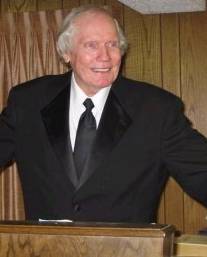
We would like to believe that religion--even in a free market setting--brings out the best in people. Unfortunately this is not always the case. Take the Westboro Baptist Church. One of the central teachings of its late pastor, Fred Phelps is--and I quote: "God hates fags."
Phelps was 100% consistent in his homophobia. His followers picket military funerals, because the armed forces are considered to be too tolerant of homosexuality. For the same reason, Phelps has made extreme statements, which could easily be interpreted as violent threats, against the king of Sweden.
Swedes tend to have a pragmatic, live-and-let-live outlook. This is especially true for the acceptance of Gays and Lesbians in Swedish society. However the dirty little secret about the overrated Swedish tolerance is that it does not extend to home-schoolers.
Phelps has also said some nice things about Saddam Hussein, who was tolerant of the religious views of his deputy prime minister, Teriq Aziz, and of other Assyrian Christians. However that does not mitigate the fact that Saddam Hussein was a mass-murderer.
From a business perspective, Phelps has been somewhat successful in exploiting a niche market for his extreme, religiously-based brand of homophobia. That's quite a contrast with the nice religious folks who support AA.
I'm very disturbed by Phelps' hate-mongering in the name of religion. However as a rational person, I understand that Phelps' ministry is an unfortunate side-effect of free-market economics in the religious sphere. There's a kernel of truth in the old Libertarian saying: Free speech is offensive speech.
There's also a Multi-Level Marketing business model embedded within the doctrines of some Protestant denominations. Even if your life is less than exemplary, you can still accrue salvation credits in your cosmic bank account, by proselytizing on street corners, and 'saving the souls' of others. After you throw off the mortal coil, that may tip the scales in your favor, and help you avoid going to 'that other place'.
The long-term success of any religion is partly determined by its main precepts, which are an inescapable part of its business model. Another example: A religion, which encourages parents to have large numbers of children, has the potential to out-breed the competition. Fortunately for the planet, fertility cults tend to have high defection rates in countries like the USA, which are long past the hump of the Demographic Transition, and which have traditions of religious freedom.
A word of advise for religious entrepreneurs: In light of Rev. Camping's fizzled Bible prophesies of 1994 and 2011, don't get too specific in your end-of-the-world predictions. Better still, don't make falsifiable claims of any kind.


Secular religions
No discussion of religion is complete without mentioning the secular ones. For example, the Marxist religion is alive and well in the 'workers' paradise' of North Korea. And as of 2015, we Americans are saddled with a Marxist Messiah in the White House.
Some secular belief systems qualify as religious, because of the irrational fervor of the followers at the bottom of the food chain. You can't reason with a died-in-the-wool Marxist.
Secular religions differ from traditional ones in two important ways. Harold Camping notwithstanding, the leaders of traditional religions are careful to avoid making falsifiable claims of any kind.
Yes, talk about what happens to the spirit after the body dies. And yes, talk about morality. But don't run the risk of making false predictions that will come back to haunt you down the road. Becoming the laughingstock of your community is not a viable business strategy.
In contrast, the Warmist religion--as in Catastrophic Anthropogenic Global Warming--does make falsifiable claims. The Warmies' holy computer models have been falsified again and again.
But the Warmies are reluctant to retreat from earlier extreme positions. They switch marketing tactics instead.
They experiment with new labels. Global Warming has lost traction; so they glommed onto Climate Change.
They've even tried on Climate Disruption and Extreme Weather for size. But it's the same old baloney.
The opinion leaders of the Global Warming movement pursue various agendas, which have precious little to do with benefiting humanity. For example, the university-based Warmist mafia is a major component of the multi-billion-dollar, government-subsidized climate fraud industry.
Unfortunately for the Warmies, the world's weather is not cooperating with their failed computer models. And 'climate fatigue' is affecting public opinion even in the strongly environmental Western European countries. Most academic Warmies are desperate to maintain the climate fraud gravy train.
Speaking of gravy trains... In early 2013, Current TV was sold to Al Jazeera. Al Gore's share of the deal netted him an estimated $100 million. Some of Gore's disillusioned former followers feel that he has sold out to 'Big Oil'. I say: Par for the course.
Like grass-roots Marxists of the early 20th Century, rank-and-file Warmies are mostly True Believers in the Eric Hoffer sense. But in Climate Alarmism--as well as other political/religious movements--there is some inversion of belief at the top.
The second main point about secular religions: Unlike traditional religions, secular religions that repeatedly make failed predictions are not worthy of our respect. It is definitely OK to call BS on their bogus claims. To quote the late Daniel Patrick Moynihan in another context,
You are entitled to your own opinion, but you are not entitled to your own facts.
Evaluating religious alternatives
Some Christians believe that because of a Fundamentalist interpretation of the Garden of Eden story, people are basically evil. This is called Original Sin. Here's the Fundamentalist escape clause: unless you accept JC as your personal savior. Then you can lead a virtuous life, and avoid fire and brimstone in the Afterlife. From my perspective, fear is not the world's best marketing strategy.
Anyway, it'd be fun to do a statistical study of crime rates among self-reported Christians in the USA, as compared with those of self-reported non-Christians having comparable demographics. Until some good empirical evidence surfaces, I'm going with the Null Hypothesis.
Many non-religious folks believe that human nature is a mixed bag, and that with skilled parenting, most people turn out to be more good than bad. There's an overlapping range of "none of the above" worldviews.
These include Agnostics, Atheists, Brights, Freethinkers, Humanists, and Skeptics. Humanists believe that Humanity is capable of solving its own problems--with or without Divine intervention. Atheism is a fairly nuanced concept.
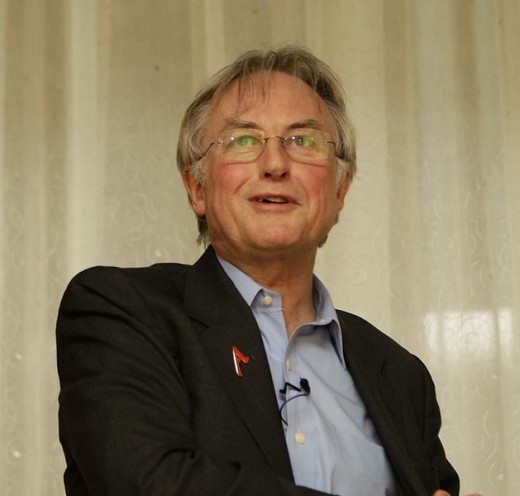
The old Soviet Union promoted hard-core Atheism: the doctrine that God definitely does not exist, which is an article of faith in its own right. However where I live in Northern California, half of my Atheist acquaintances are Agnostic Atheists, who believe that God probably does not exist. Evolutionary biologist Richard Dawkins (pictured above) has written extensively on the theme of Atheism.
For whatever it's worth, Unitarian Universalists are respectful of non-traditional worldviews, and nonreligious folks are readily accepted within the Unitarian community. If I were a parent, I'd give serious consideration to becoming a UU, because of the mostly tolerant atmosphere.
The religious views of individuals are worthy of respect, provided that the respect is reciprocated. But what about organized religion? Taken as a whole, market-based religion is a mixed bag.
The only thing that really matters is the Golden Rule. If you're shopping around for a religion, be prepared to do your homework. Seek out a religion that promotes the dictum from the film, Bill and Ted's Excellent Adventure: Be excellent to each other!
Copyright 2011 and 2015 by Larry Fields