Women, Tweak your Aerobic Exercise Routine to Boost Well-Being

Are you an exercise wimp?
Introduction
This hub is more for women than for men. Why? Because the ABAB Testing described below requires a certain amount of intuition. Women tend to have more common sense about health than men. As compared with men, women are also less afraid of seeing themselves as wimps.
Men tend to take shortcuts in the discovery process that I advocate. They are more apt to choose a 'tough guy' aerobics routine, which gives negligible mood boost, and then to drop out, because they feel that 'exercise is boring', or because they 'do not have enough time for regular exercise'.
Of course, men are also welcome to follow my suggestions for finding the aerobic 'sweet spot'. Do you have have the right stuff to be an exercise wimp? If so, please read on.
In a recent hub, we looked at the psychological factors that go into the design of one's own exercise program. The next step is to consider the general categories of workouts: aerobics, strength training, or some combination of the two. Some find it beneficial to add stretching and balancing exercises. In this hub, we'll focus on aerobics, and how to optimize your aerobic workout for boosting your mood.
Regular aerobic exercise can give many health benefits. One of these is increased insulin receptor sensitivity. This interests me, because diabetes runs in my family.
Is it better to optimize your aerobic workouts for the mood boost, or to push yourself in order to optimize the other health benefits? If you optimize for the psychological lift, you're more likely to stick with that exercise routine. Moderate regular aerobic exercise is better than gung-ho albeit irregular aerobic exercise.
For most people in good health, brisk walking is a great form of aerobics. In the "How much" section, I'll use walking as a metaphor for aerobic exercise in general.
Which exercise?
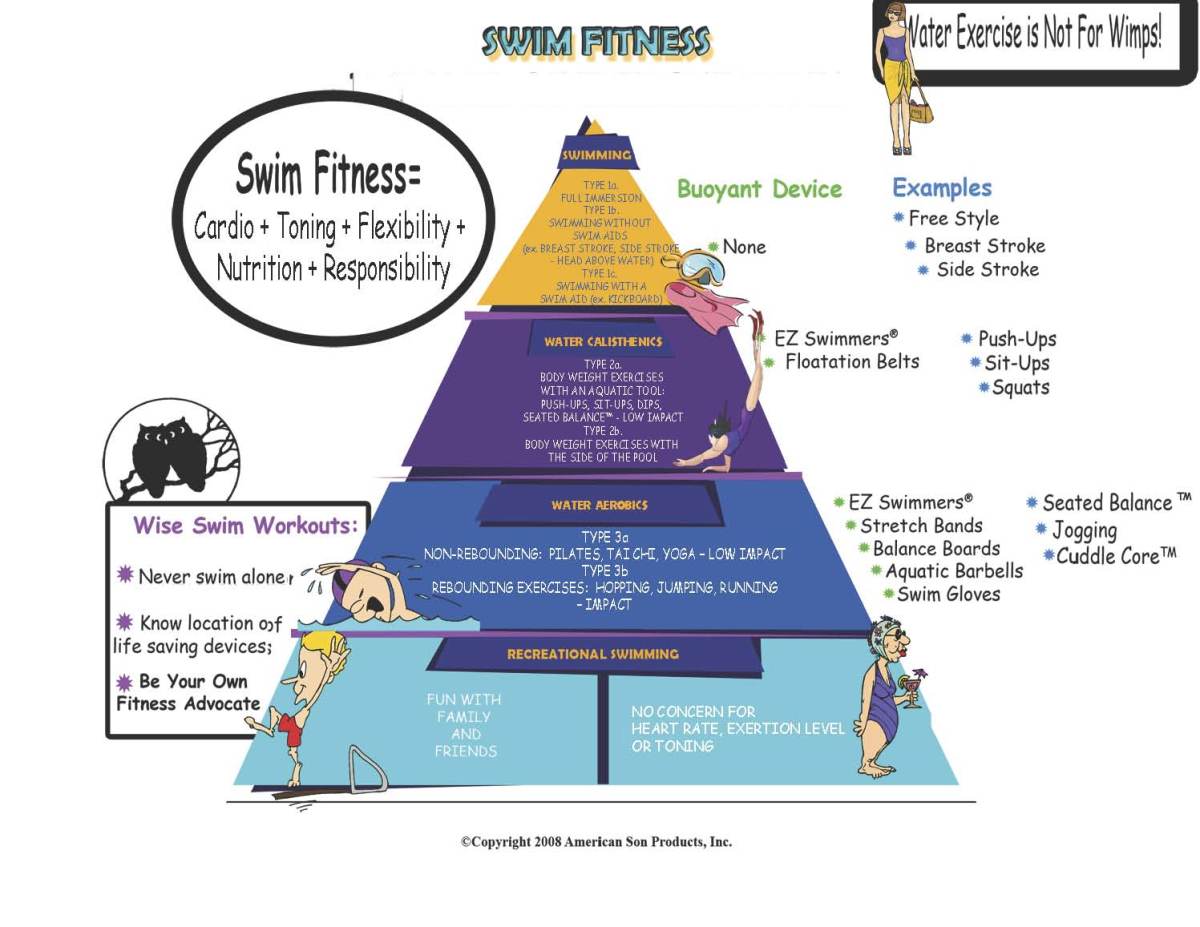
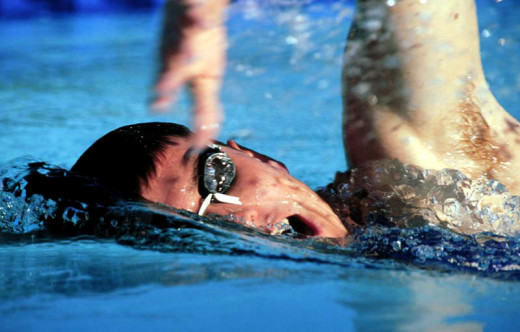
In the past, swimming was billed as the best all-around exercise, and as being low-impact. However both claims are exaggerated. Swimming is easy on the knee joints, but is not necessarily safe for an arthritic hip, like mine.
For skeletal health, it's recommended that women over the age of 50 include some weight-bearing exercise, like walking, in their daily routines. Although swimming is a great aerobic exercise, it does not qualify as weight-bearing.
Women who choose swimming as an aerobic exercise, may want to add strength training to their routines. A first priority would be some exercise for the quadriceps. The quads are the large muscles in the front of your thighs.
Another alternative is to do swimming on even-numbered days, and walking on odd-numbered days.
Running or jogging is a reasonable choice for busy healthy young adults who want to get an intense aerobic workout in a short amount of time. However if you start getting knee pain, I recommend that you stop running immediately, and switch to some other form of aerobics. 'Working through the pain' or 'toughing it out' is a recipe for serious knee problems in your Golden Years.
Cycling can provide all of the intense aerobic benefits of running, with considerably less wear and tear on the knees. For those who live in rainy climates, your local gym will probably have variable-resistance stationary bicycles.
Trikking
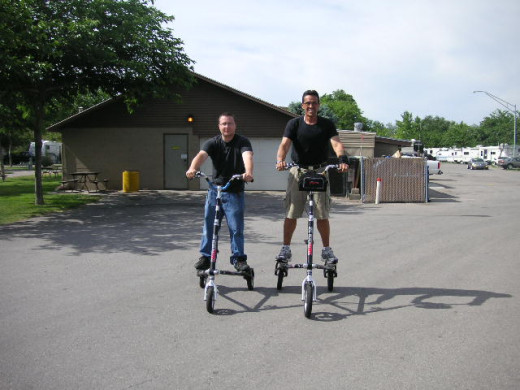
This is an option that deserves more consideration. A Trikke -- say "trike" -- is a human-powered vehicle with three small wheels. Like a bicycle, a Trikke has handlebars with hand brakes. Unlike a bicycle, there is no saddle. Instead, there are platforms for your feet, just above the two rear wheels.
How do you make it go forward? You shift your body weight from side to side, while turning in the direction of the weight shift. This will take you on a curvy trajectory on a sidewalk or bicycle path.
When you become proficient at this cambering motion (which requires a fair amount of practice), trikking on a level sidewalk is more energy-efficient than running; so you get more of a cooling breeze on a sweltering Summer day.
As compared with bicycling, trikking is less energy-efficient. However you don't get Monkey Butt from an uncomfortable saddle.
The big advantage is that trikking is great low-impact aerobic exercise for people with knee and hip joint issues. And yes, trikking is a weight-bearing exercise.
A bicycle helmet is mandatory. And be aware that trikking on a wet surface greatly increases the probability of falling.
In the Fall of 2006, I woke up one morning, and found that I had painful rheumatoid arthritis (self-diagnosed) in my hip. I knew that aerobic exercise releases endorphins, the body's natural equivalent of opiates, which decrease pain. Brisk walking was out of the question, because the repetitive stress on my arthritic hip joint would have been too painful. So I took up trikking. And it was helpful as a do-it-yourself physical therapy. Since then, I've been able to manage the rheumatoid arthritis with diet and exercise alone, and no medication.
How much aerobic exercise?
Doing the right amount of walking feels good. How to optimize the length of your walk for well-being?
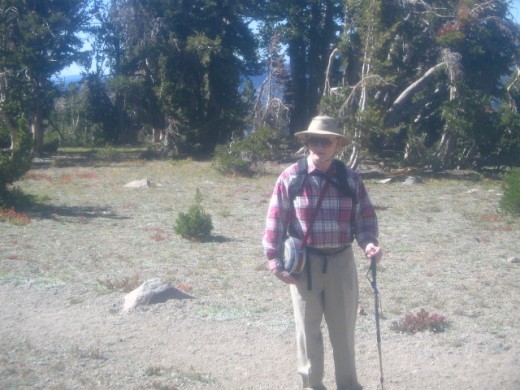
Some exercise authorities recommend brisk walking for X distance, or for Y amount of time. And that recommendation may reflect scientific research on easy-to-measure health benefits. But in terms of the aerobic mood boost, one size does not fit all. I know an elderly gentleman who really enjoys his one-mile ( 1.6 km) evening walks. I'm guessing that he takes 20-25 minutes for his walks. And he's a strong hiker for his age.
However my body is different. Before I started mindful strength training, 35-40 minutes of brisk walking gave the biggest post- exercise mood boost. Back then, I usually walked longer than that, simply because I enjoy walking. Again, your optimum may be greater than mine, or less than mine. And your morning optimum may be greater than your evening optimum. Once you find that 'sweet spot', you'll look forward to your daily walks.
The best way to optimize the mood-lift from walking is to experiment. There are two considerations in designing your walking experiment.
First, you want to have a reasonable difference in walking time from one session to the next. If your first experimental walking session is 15 minutes, do 20 minutes in the second session. Then you're more likely to feel the effects of a change in your walk length.
You also want to correct for day-to-day changes in your baseline mood. On some days, you sleep better than on other days. On some days, you're more stressed out. On some days, you don't eat as well. The upshot: On some days, your exercise requirement is greater. You want to get a ballpark estimate for the walk length, or walking time, that gives you an optimum mood-boost on a typical day.
I suggest starting with 15 minutes of brisk walking. Before and after the walk, note how you feel. You may even want to keep an exercise diary at first.
The next time you're out, increase to 20 minutes of brisk walking. Is the mood boost greater or less than the previous walk? If you feel better with 20 minutes of walking, is it because more exercise is better, or is it because the circumstances of that day have increased your exercise requirements? Here's how to find out.
For your third excursion, go back down to 15 minutes. Again note how you feel before and after. Then go back to 20 minutes. Engineers call this ABAB Testing.
Then do ABAB Testing for 20 minutes of brisk walking, as compared with 25 minutes. And so on. Eventually, you'll find the sweet spot. I'm guessing that the sweet spot for most people is somewhere between 20 and 45 minutes.
For people who use Gorilla Walking as their primary form of aerobics, the sweet spot can shift downward. Suppose that you have used ABAB Testing to find the optimal amount of aerobics for boosting your mood. One month later, that optimum may decrease by as much as 20%. Sustainable aerobic work involves both muscles and mind.
The main points about ABAB Testing are that you have reasonable jumps between aerobic exercise levels, and that you do repeated experiments in order to determine what works best for you. This is largely common sense; it is no't rocket science.
You can do it
The previous section is the heart of this hub. The big question for many readers: Can I really find my aerobic sweet spot? Yes, you can.
Suppose that the first stage of ABAB testing proves to be inconclusive. Do I feel better with Level A aerobics, or with Level B? Fair question. If you do not feel confident about that, continue doing ABAB until do feel confident about which level gives the biggest psychological boost.
At any given stage, ABAB Testing may turn out to be ABABAB Testing instead. What's the worst thing that can happen? You'll be getting a positive emotional payoff, and probably will not be overdoing your aerobic work. Is that such a bad thing?
Anyway, continue with ABAB Testing until you are confident that exercising at Level B does feel noticeably better than at Level A. Finish that BEFORE moving on to BCBC Testing.
Let's say that you've been doing 35-45-35-45 Testing for a week, and you're reasonably confident that both exercise times feel equally good. Congratulations! You've just zeroed in on your aerobic sweet spot. It's approximately 40 minutes.
Realistically, you can expect to spend a fortnight (2 weeks) or so pinning down your aerobic sweet spot. During this time, you may have some doubts about ever finding your aerobic sweet spot. If so, that degree of self-doubt is par for the course. And it's more pleasant than being a couch potato, and considerably more pleasant than burning out on exercise.
Walking, Food, and Body Fat
Some people conjecture that aerobic exercise is not helpful for fat loss, because it increases one's appetite. Here's my experience. If I do a 10-mile (16 km) mountain hike, I'll probably be hungrier than usual. But if my aerobic walk is in the optimal mood-boosting zone, it has no effect on appetite.
Of course, your metabolism will remain elevated for some time after you finish the walk. Since you burn more calories than usual during and after the optimized walk, and your appetite stays the same, you'll lose some body fat.
Some people who take up an aerobic walking routine are disappointed to find that they don't lose any weight. However the bathroom scales do not tell the whole story. You are gaining a little lean muscle mass in your lower body, and losing a little body fat. Slightly less body fat translates into greater insulin receptor sensitivity, and slightly better health. Don't be discouraged.
If you're feeling the least bit hungry before your walk, have a light carbohydrate snack before you head out the door. Bonking--to use a bicyclists' expression--will take all of the enjoyment out of your walk.

Caveats, a Walking Tip, and a Question
For some individuals, walking is not the best aerobic exercise. For people with serious knee issues, either trikking or swimming would be a better choice. If you have cardiovascular problems, please check with your physician before starting an exercise program.
If you're diabetic, walking can decrease your insulin requirements. On balance, that's a good thing. However walking without adjusting your insulin dosage can lead to low-blood-sugar episodes. Be sure to carry a light carbohydrate snack with you on your walks.
Depending on where you live, rainy weather need not interfere with your walking routine. Mall-walking may be an alternative. Some shopping malls even have a special walking hour, before the stores are open.
After you find the sweet spot for your walking routine, please post a comment. I'm curious. How many minutes of brisk walking are best for you?
Copyright 2011 and 2015 by Larry Fields